Halter Breaking Calves
- Sarah Heimeyer
- Apr 3, 2022
- 4 min read

Updated: Apr 6, 2022

Woohoo! You just received your next show animal or just weaned your next one now is where the blood, sweat, and maybe some tears begin! It doesn’t have to be as frustrating as it seems though.
As soon as you receive your animal we recommend you begin by taking its halter off, putting it in a small pen, and letting it rest for 3-4 days. It just got taken off of its mom and is in a new place, if I was that calf I would be stressed and terrified too. The next day after getting your calf home, go out, be calm, and give your calf some fresh feed and water and LET IT BE and do the same thing in the evening. The 2-3 days do the same thing but sit outside the pen working on homework, watching videos, or cleaning out the animal stall so you don’t have to do it later.
Now that your calf has calmed down a bit you can begin the halter-breaking process. When you have the halter in hand, go back to scratching on your calf and inch closer to their head with the halter. Slowly begin to put the halter on their head, placing it over the ears first and then over the nose. It’s easier to go over the ears first on their first catch because it won’t feel as weird or frightening as catching them under their chin the first time. Once the halter is mostly on their head, grab the end of the lead and cinch it tight on their head so you have them caught. This will be a new feeling for your calf and it will not like the loss of freedom, so make sure you have plenty of lead in your hand to prepare for pulling back and trying to run.
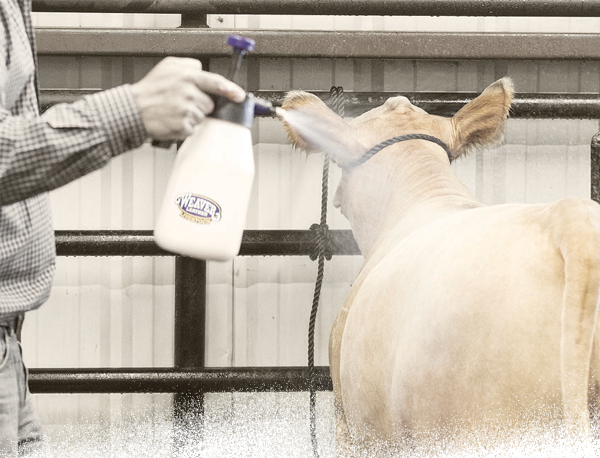
Go to the closest sturdy post and tie your calf up on one of the lower bars. It is important to tie your calf up with a simple quick-release knot so you can easily tie and untie your calf in case of an emergency since this is all new to them and they are likely to flip over (or attempt to). After a few days (or weeks) of tying your calf low and it becoming calmer around you and getting tied you can begin to tie its head up. It is important that you are there to keep an eye on your calf so you know if they try to go down or get hurt.
Alright now get those muscles you’ve gained from carrying feed bags and water buckets ready because now the race begins. Before I continue the first thing I want to get out of the way is SLOW AND STEADY WINS THE RACE, CALM IS KEY! When your calf is standing relaxed and doing well with tying with minimal fighting, it’s time to start leading. Before trying to lead it out of the pen and straight to your washing or blowing area, you should plan to lead it around the pen some, so it gets used to leading (if your pen space allows). Start by untying your calf and trying to pull it a few steps. Each time your calf takes 3-5 steps forward, reach out and loosen up the halter some and rub on its head and praise them. This acts as a reward system for taking steps forward. Be prepared for your calf to potentially jump forward when you pull or even run past you. Do your best to hold on to the lead, as letting go teaches your calf that it can do that every time and getaway. When you feel like it is coming forward well, you can think about getting it out of the pen to wash and work more outside. You should be doing this every day, persistence is key.
Once you have gone through the first five steps, your calf is basically halter broke. However, to ensure it acts great and is ready for the show ring, it’s important to keep it on a consistent regimen every day. Here are a few extra tips and tricks you can try:
Catch and tie each day to feed – This teaches your calf to be caught every single day in order to eat, and soon catching your calf will be very easy.
Tie your calf up for 2-3 hours after washing/ working– Instead of turning it loose right after you are finished drying, let it stand for a little while to teach some endurance.
Practice showmanship for 20-30 minutes each night – Before you turn your calf out in the evening, try practicing walking it and setting it up with the show stick for at least 20 minutes each night. This will get it used to the show stick being used on its feet and will make its first time in the ring much better!
“6 Steps to Successfully Break Your Calves.” Sure Champ, 25 Sept. 2019, surechamp.com/6-steps-to-successfully-break-your-calves/. Accessed 23 Mar. 2022.

Comments